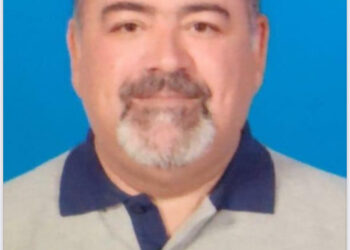
Shawky Fahel
My family lived in the old houses on the narrow alleys of Al Ajami not far from the old port of Jaffa. Millions of the Jaffa oranges from the town’s groves moved through all the Mediterranean and on to the rest of the world. Although blessed by nature and rich in history, Jaffa did not find peace in the last century.
When the State of Israel was formed in 1948, many of my relatives relatives fled from their homes. In the case of my family, we eventually found peace and opportunity in Canada. I still have the deeds for my uncles’ homes – but today these documents mean nothing.
Now, those who managed to stay in the historic Arab areas hear nightly shouts of “Death to Arabs,” and in Jaffa’s Al-Ajami neighbourhood. Just last week thugs threw Molotov cocktails on a family at 1 o’clock in the morning while they slept. In the family home there were two brothers, 8 and 10 years old. One brother suffered second degree burns. He is being treated in the Tel Hashimer Hospital in Tel Aviv.
Nightly, I talk to my relatives who remain. Some live in Jerusalem, others in Jaffa, Lod, Haifa and Galilee.They are frighted for their future. They speak fluent Hebrew. Some work on the front lines as medical doctors and nurses. But they are always second class in what has become a Jewish state under Benjamin Netanyahu.
In July of 2018, the Netanyahu government legislated a law proclaiming ‘Israel is a Jewish State’. Netanyahu has referred to the Arab population of Israel as an “internal enemy.” The even more extremist minister of internal affairs, Amir Ohana, has encouraged more guns and killing, if needed, to deal with these “internal enemies.”
The protests in Israel, with the bombings and deaths that followed, were set off by the impending court decision to evict 26 Arab families from their homes in Sheikh Jarrah in East Jerusalem and the attacks on the Al Aqsa mosque. Those were the sparks. But the fuel was everywhere in the State of Israel.
Although Israel professes itself to be a constitutional democracy, Arab rights are restricted – particularly property rights. The world is now learning why the internationally-respected Human Rights Watch recently declared Israel to be an apartheid state. The New Yorker reported that, although the Arab population is 700% larger than when my family fled Jaffa, not a single new Arab settlement has been built. But more than 700 Jewish communities have been built in Israel and the occupied West Bank.
The influential Financial Times has pointed out that the issue is not a few houses in Jerusalem but the “plan hatched long ago by rightwing Israeli settlers: pick out Palestinian homes in East Jerusalem, evict the owners using property law that favour Jews over Arabs Then one house at a time, turn entire neighbourhoods Jewish.” It is, “a symbol of vast tracts of Palestinian land confiscated by the Jewish state over decades of occupation.”
Occupation corrupts the occupier as it oppresses the occupied. Arabs, living in Israel, do not face the hardships of the West Bank or the tragic deaths and destruction in Gaza, but they too are the victims of a state that privileges one group over another. They are just over 20% of the population, almost the same as French-speaking Canadians in Canada. But Arabs living in Israel have no place in government. They are excluded from high tech and board directorships. They face a justice and policy system where almost no-one speaks their language, understands their history or accepts their arguments for justice.
I have not thrown away my uncles’ deeds. I have always dreamt that justice would finally come to the land of my birth. Perhaps the time has finally arrived to throw them in the fire. A fire that has the sad but real potential to engulf the whole region if justice is not done.
Jon Allen’s recent op-ed, in the Globe and Mail, summed up the situation very clearly and succinctly, ‘Without Palestinian rights, there is no solution’.