Jalal Mudher:Editor-in-Chief
Since the year 2003, when Saddam Hussein’s regime fell in Iraq, the Iraqi scene has not witnessed a popular leader whose fans rally around him, follow his directives, and do not deviate from his will, just as Al-Sadr is obeyed by a wide spectrum of his followers from northern to southern Iraq.

Al-Sadr’s followers are not limited to the Shiite component, “although it is the majority,” but rather include Sunnis, Kurds, and even some Christians.
In a new and encouraging phenomenon in Iraqi society, all Iraqi components have come together to follow a pivotal, influential figure who has weight on the scene, such as the figure of Mr. Muqtada al-Sadr, son of the great authority and martyr Muhammad Sadiq al-Sadr, heir to the most ancient religious family in the Iraqi Shiite and Islamic community.


Although the Sadrist movement obtained the highest votes in the last parliamentary elections that took place in Iraq, and the Sadrist movement was a candidate for prime minister, Al-Sadr ordered his followers to resign, leave politics, and devote themselves to serving his popular bases due to his dissatisfaction with the ruling political system, which Al-Sadr accuses of corruption.
Iraqis are now hoping for goodness in Al-Sadr’s recent moves to establish a new entity that brings together the Iraqi identity He fights corruption and the corrupt and corrects the democratic path that others failed to achieve.
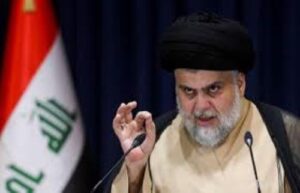
The new entity was called the “National Shiite Movement,” and Al-Sadr confirmed that new youth blood would lead this new entity, which came to correct the path of democracy and achieve the reform that Mr. Al-Sadr calls for. The Iraqis even gave the title of the sponsor of reform to Mr. Muqtada Al-Sadr.
Through my observation of the Iraqi reality, I see that the Iraqis are full of hope that this entity that was born from the womb of suffering will be able to change the bad reality and build a sovereign and independent state in the Middle East.